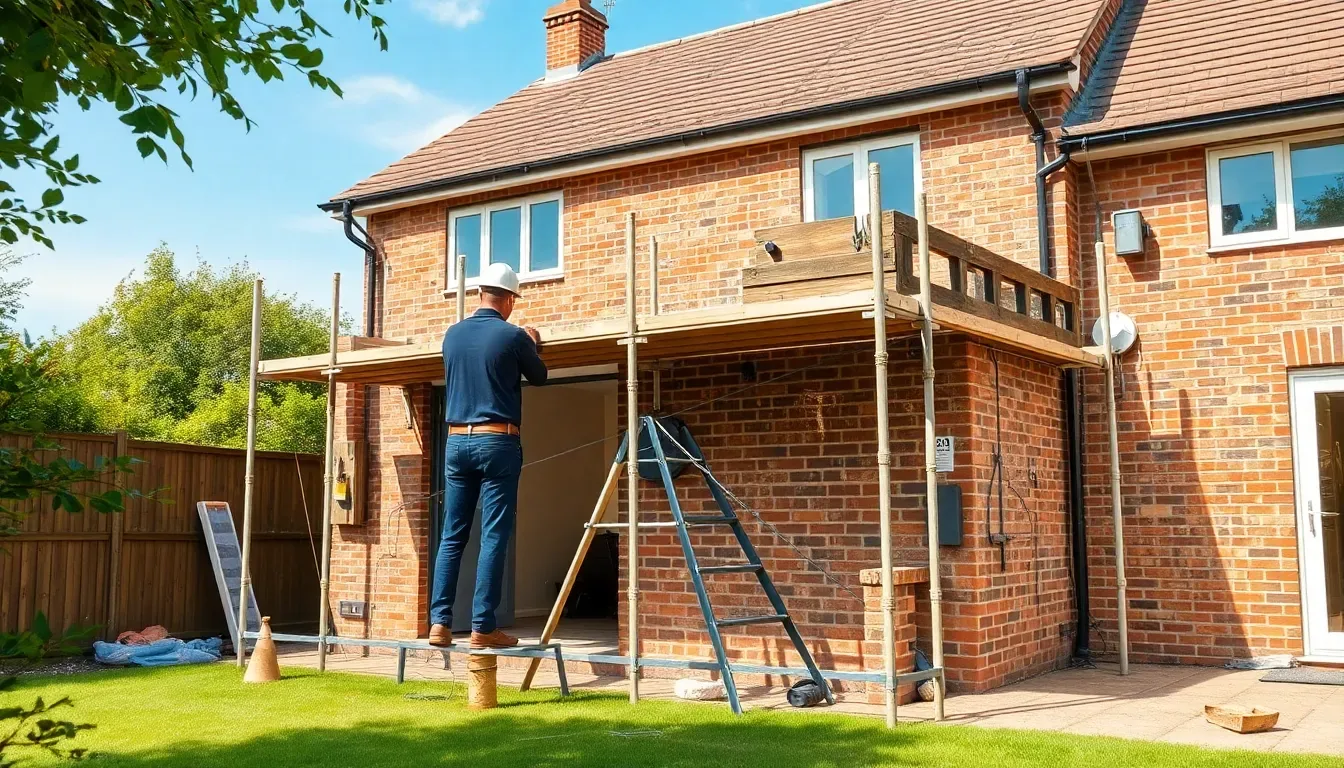
House Extension Cost (2026 UK Guide)
Quick answer: A house extension costs £1,800 to £3,500 per m2 in 2026 — roughly £30,000 to £60,000 for a standard single-storey rear extension.
The home extension cost most UK homeowners can expect in 2026 is £1,800 to £3,500 per m2, or roughly £20,000 to £70,000+ for a typical project. A standard single-storey rear extension usually lands around £30,000 to £60,000, while a double-storey or wrap-around can reach £70,000 to £90,000+. Your final cost depends on the size, the spec and where you live. The figures here are typical 2026 UK ranges to help you budget; for a firm price, compare quotes from a few extension builders and main contractors.
That’s because we’re an independent directory, not a builder or design service. We don’t sell extensions — instead, we compare your options and route you to multiple vetted builders so you can choose the right one for your home and budget.
House extension cost at a glance (2026)
Here’s a price-at-a-glance summary of house extension costs by type in the UK as of 2026. The per-m2 band reflects finish level; totals exclude furnishing and professional fees.
| Extension type | Cost per m2 | Typical size | Typical total cost | Timescale |
|---|---|---|---|---|
| Single-storey rear | £1,800 – £3,000 | 15 – 25m2 | £30,000 – £60,000 | 8 – 14 weeks |
| Double-storey | £1,800 – £3,200 | 25 – 40m2 | £50,000 – £90,000 | 12 – 20 weeks |
| Side-return | £2,000 – £3,200 | 10 – 18m2 | £40,000 – £70,000 | 10 – 16 weeks |
| Wrap-around | £2,000 – £3,500 | 25 – 45m2 | £50,000 – £90,000+ | 14 – 22 weeks |
| Kitchen extension | £1,800 – £3,200 | 12 – 25m2 | £25,000 – £50,000 | 8 – 16 weeks |
Typical 2026 UK ranges, excluding furnishing and professional fees. Prices are guide figures, not guaranteed quotes — get a free quote for your extension.
These ranges assume a standard build on reasonable ground. However, difficult foundations, large glazing or bi-folds, a high-end finish and professional fees all push the price up — see what affects the price below. To turn these figures into a firm number, compare quotes from extension builders near you.
Extension cost by type
First and foremost, the biggest factors in your extension cost are the type and size. Here’s how the common types compare.
Single-storey rear extension cost
The most common extension — extending out into the back garden to enlarge a kitchen, dining or living area.
- Cost per m2: £1,800 to £3,000
- Typical size: 15 to 25m2
- Typical total: £30,000 to £60,000
As a citable headline: the average single-storey rear extension costs around £1,800 to £3,000/m2 in 2026, with the finish level (especially glazing and kitchen fit-out) driving where you land in the band.
Double-storey extension cost
Adding two floors at once — typically extra living space below and a bedroom or bathroom above.
- Cost per m2: £1,800 to £3,200
- Typical size: 25 to 40m2
- Typical total: £50,000 to £90,000
In fact, double-storey extensions are often better value per m2 than single-storey, because the foundations and roof are shared across two floors rather than one (see the FAQ below).
Side-return extension cost
Filling in the narrow alley down the side of a property — popular with Victorian terraces to widen a galley kitchen.
- Typical total: £40,000 to £70,000
That said, side-returns are compact but can be fiddly (access, party walls, glazing), so the per-m2 rate can be a little higher than a simple rear extension.
Wrap-around extension cost
Combining a rear and a side-return extension into a single L-shaped addition — the most transformative (and usually the most expensive) single-storey option.
- Typical total: £50,000 to £90,000+
As such, wrap-arounds add a lot of floor area and often include large glazing and a new kitchen, which is why they sit at the top of the single-storey range.
Kitchen extension cost
Any extension built primarily to create a larger kitchen or open-plan kitchen-diner. The shell is priced like a rear or side-return extension, plus the kitchen fit-out.
- Typical total: £25,000 to £50,000 (shell + standard kitchen)
That said, the kitchen itself can vary enormously. For the fit-out side of the budget, see our kitchen renovation costs guide.
Over-structure / above-garage extension cost
Building a new room above an existing single-storey structure such as a garage or utility.
- Typical total: £25,000 to £45,000
Ultimately, cost depends heavily on whether the existing foundations and walls can take the extra load, or need strengthening.
House extension cost per m2
Because per-m2 pricing is the standard way builders cost an extension, it’s the most useful number to plan with. The rate depends almost entirely on the finish level:
| Finish level | Cost per m2 | What you get |
|---|---|---|
| Basic / standard | £1,800 – £2,200 | Standard build, basic fittings, modest glazing |
| Mid-range | £2,200 – £2,800 | Better fittings, more glazing, good kitchen/bathroom |
| High-end | £2,800 – £3,500+ | Premium finishes, large bi-folds/rooflights, architect detailing |
Typical 2026 UK ranges per m2. London and the South East sit at the upper end (see region table). Get a quote for your spec.
So, to estimate a project, multiply your floor area by the appropriate rate — for example, a 25m2 mid-range single-storey extension at £2,400/m2 is roughly £60,000 before professional fees and VAT. That said, always treat this as a starting point and confirm with quotes.
House extension cost by size
Here are worked examples across common sizes at a mid-range spec:
| Floor area | Basic (£1,800/m2) | Mid-range (£2,400/m2) | High-end (£3,200/m2) |
|---|---|---|---|
| 15m2 | ~£27,000 | ~£36,000 | ~£48,000 |
| 25m2 | ~£45,000 | ~£60,000 | ~£80,000 |
| 40m2 | ~£72,000 | ~£96,000 | ~£128,000 |
Typical 2026 UK ranges, shell + standard fit-out, excluding professional fees and VAT. Get a quote for your exact size.
What’s included in an extension quote
A proper extension quote should be a complete build package. Typically it covers:
- Foundations and groundworks
- Structural steels and any beam work
- Walls (blockwork, brickwork or render)
- Roof (flat, pitched or with rooflights)
- Glazing — windows, doors, bi-folds or sliding doors
- Electrics — lighting, sockets, consumer-unit work
- Plumbing and heating — radiators, and waste/supply for a kitchen or bathroom
- Plastering and decoration
- Flooring
- Kitchen or bathroom fit-out (if applicable — often a separate line)
- Building control sign-off
Always check whether professional fees (architect, structural engineer) and VAT are included or extra. In short, a clear, itemised quote is the only reliable figure — compare quotes from extension builders and check each one lists the full scope.
What affects extension price
Indeed, two homes on the same street can get very different quotes. The main cost drivers are:
- Spec and finish — the single biggest lever, as the per-m2 table shows.
- Ground conditions and foundations — poor soil, trees, drains or a high water table mean deeper or special foundations and more cost.
- Glazing area — large bi-folds, sliding doors and rooflights look stunning but add significantly to the budget.
- Planning vs permitted development — work needing planning permission carries application fees and time.
- Party wall agreements — extensions near a boundary usually need agreements with neighbours, which can mean surveyor fees.
- VAT — extensions are standard-rated for VAT, unlike some new builds, so factor it in.
- Professional fees — architect and structural-engineer fees typically add around 10 to 15% on top of the build cost, and are often excluded from a builder’s quote.
That last point catches a lot of people out: a builder’s quote usually covers the build, not the design and engineering behind it. So, budget for fees separately so the total isn’t a surprise.
House extension cost by region (2026)
Where you live affects what you pay, mainly through local labour rates. London and the South East are the clear premium outlier, running roughly 20 to 50% above the national average, while the North, the Midlands, Wales and Scotland are well below it. Indeed, our own demand data shows this clearly: extension-related advertiser costs in London run far above those in Liverpool, York, Leeds, Manchester or Nottingham, reflecting higher labour rates and overheads in the capital.
| City / region | Cost vs national average | Notes |
|---|---|---|
| London | Highest (20 – 50% above) | Premium labour and overheads |
| Bristol & South West | Above average | Tracks the South East |
| Birmingham | Around average | Mid-range Midlands |
| Manchester | Around / below average | Mid-range North West |
| Leeds | Below average | Lower labour rates |
| Liverpool | Below average | Among the lower-cost cities |
| York | Below average | Lower labour rates |
| Nottingham | Below average | Lower labour rates |
| Glasgow | Below average | Lower labour rates |
| Cardiff | Below average | Lower labour rates |
Directional 2026 guide based on regional labour costs, not fixed quotes. Get free local quotes for your area.
So, the practical takeaway: if you’re in London or the South East, comparing three or more quotes matters even more, because the spread between builders is wider. Either way, comparing local extension builders is the surest way to find a fair price.
Does an extension add value?
A well-designed extension usually adds value — especially one that creates a sought-after open-plan kitchen-diner or an extra bedroom and bathroom. As a rough rule, the cost-vs-value equation is favourable in higher-demand areas, where the uplift can match or exceed the build cost.
That said, the caveat is ceiling prices: every street has a realistic maximum sale price, and in some areas the cost of a large extension can exceed the value it adds. So, check local sold prices before committing, and design to the market rather than over-investing.
In other words, this is the same trade-off many homeowners weigh against a loft conversion. If you mainly need a bedroom, compare with loft conversion costs — a loft is often better value for adding a bedroom, while an extension wins for living and kitchen space.
How to save on a house extension
A few sensible moves can bring your extension cost down without compromising quality:
- Stay within permitted development — designing to permitted-development rules (where possible) avoids planning fees and delays.
- Choose a fixed-price design-and-build — an all-in fixed price makes budgeting easier and limits surprise extras.
- Keep the structure simple — a straightforward rectangular extension costs less than complex shapes, big spans or extensive glazing.
- Compare 3 or more quotes — prices for the same project vary widely between builders, so always get at least three.
- Get the spec in writing — a clear, itemised quote (including fees and VAT) lets you compare like with like and avoid cost creep.
Ultimately, we don’t sell extensions, so we have no reason to steer you toward the most expensive option — our job is to help you compare and choose.
How to get free extension quotes
The figures in this guide are typical 2026 ranges to help you plan. For a price you can rely on, you need quotes for your specific project from vetted builders.
Here’s how to compare well:
- Get at least three quotes so you can spot a fair price and an outlier.
- Make sure quotes are like-for-like — same size, same spec, same inclusions (glazing, kitchen, fees, VAT).
- Check insurance and accreditations — use builders who are insured and reviewed, and ask about relevant trade memberships.
- Confirm what’s included — foundations, structure, roof, glazing, services, finishing and building control should all be itemised.
- Ask about professional fees and VAT — find out whether architect/engineer fees and VAT are in the quote or extra.
That’s exactly why, through Trusted Tradesmen Quotes, you can request free, no-obligation quotes from extension builders and main contractors near you in minutes. Because we’re independent, we connect you with multiple builders — not a single design-and-build company.
You can also find a trusted tradesman for any other job, or browse our other building cost guides — including loft conversion cost, kitchen renovation cost and driveway cost.
Get free quotes from extension builders near you and compare your house extension cost today.
Frequently asked questions
How much does a house extension cost in 2026?
Most extensions cost £1,800 to £3,500 per m2 in 2026. A typical single-storey rear extension runs £30,000 to £60,000, and a double-storey or wrap-around can reach £70,000 to £90,000+. The finish level, glazing and ground conditions drive where you land. The best way to get an accurate figure is to compare a few local quotes.
How much does a single-storey extension cost per m2?
In 2026, expect roughly £1,800 to £3,000/m2 for a standard-spec single-storey extension. High-end finishes, large bi-folds and rooflights, and London/South East labour rates push it toward £3,500/m2. Remember to add professional fees (around 10 to 15%) and VAT.
How much does a house extension cost per square foot?
Converting our per-m2 figures above, a UK house extension typically costs roughly £165 to £325 per square foot in 2026 (£1,800–£3,500/m2 ÷ 10.764 sq ft per m2), depending on the finish level and where you live. Most UK builders and architects quote in £/m2 rather than £/sq ft, so treat this as a like-for-like conversion of the same ranges above, not a separate price. Get a quote in whichever unit your builder uses.
Is a double-storey extension better value than single-storey?
Usually yes. Adding a second storey shares the cost of the foundations and roof across two floors instead of one, so the cost per m2 is often lower than a single-storey extension. As a result, you get significantly more floor area for a smaller percentage increase in cost.
Does a house extension add value?
A well-designed extension typically adds value, particularly open-plan kitchen-diners and extra bedrooms with bathrooms. However, in some areas the cost can exceed the uplift — always check local ceiling prices (the realistic maximum sale price on your street) before committing.
Do I need planning permission for an extension?
Many single-storey extensions fall under permitted development, within size limits. However, larger extensions, most double-storey extensions, and any work on a property in a conservation area usually require planning permission. Either way, always check the current rules with your local council before you start.